
A simile is a figure of speech that compares two things using words like “as” or “like.”
For example, “Brave like a lion” helps children understand bravery easily.
Similes are important because they turn complex ideas into simple pictures in our minds.
Just like similes, symbols also help explain deep meanings in an easy and visual way.
In Hinduism, symbols work like friendly teachers, helping everyone learn big ideas simply.
What Are Symbols in Hinduism?
Symbols in Hinduism are visual representations of spiritual ideas.
Instead of long explanations, a single symbol can teach values like truth, peace, power, or wisdom.
Example:
The Om symbol explains the entire universe in one sound.
Tip for kids:
Think of symbols as spiritual emojis that explain feelings and ideas without words.
Why Symbols Are Important in Hinduism
Hinduism is one of the world’s oldest living religions, and symbols help pass teachings from one generation to another.
Key reasons symbols matter:
- Easy to remember
- Helpful for meditation
- Teach morals and values
- Connect daily life with spirituality
Comparison:
Just like traffic signs guide drivers, Hindu symbols guide the soul.
Om (ॐ) Symbol Meaning in Hinduism
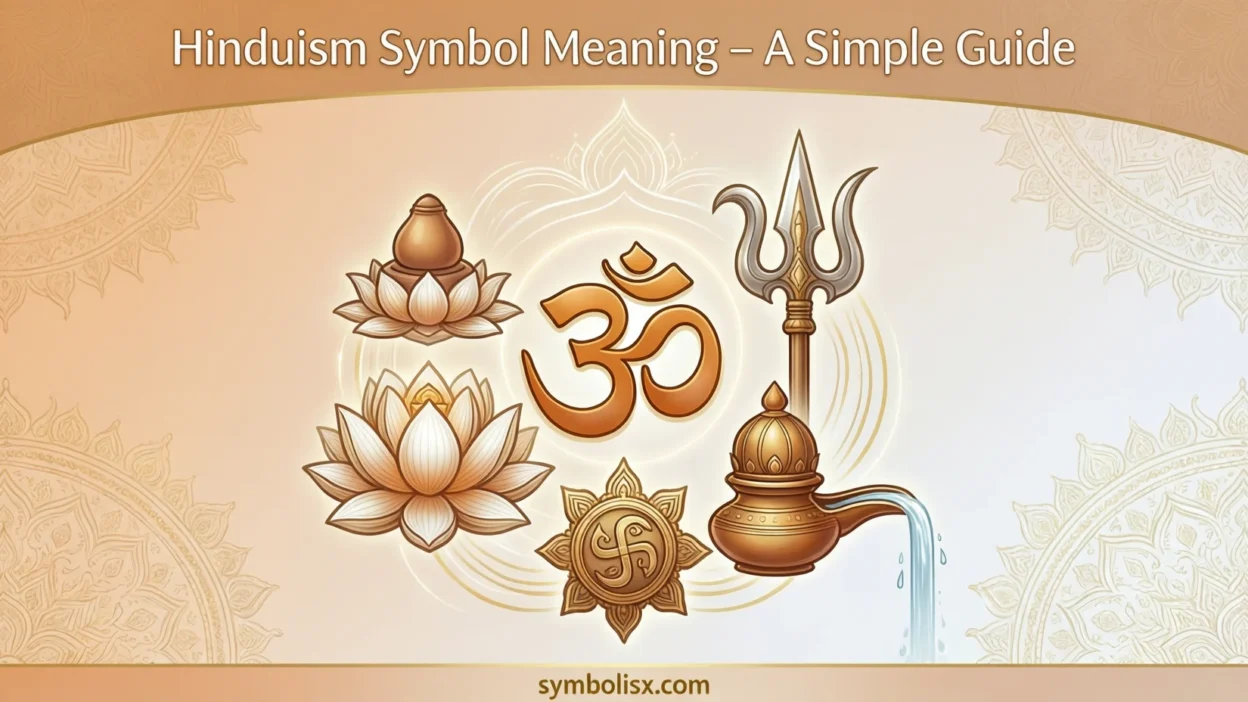
The Om symbol is the most sacred symbol in Hinduism.
Meaning:
- Represents the universe
- Symbolizes creation, preservation, and destruction
- Used in prayers and meditation
Example:
Many people chant Om before studying to improve focus.
Kid-friendly tip:
Om is like the sound of the universe breathing.
Swastika Symbol Meaning in Hinduism
The Swastika is a positive and holy symbol in Hindu culture.
It represents:
- Good luck
- Prosperity
- Positivity
- Protection
Important note:
In Hinduism, the Swastika has nothing to do with hate. Its meaning is peaceful and spiritual.
Example:
Drawn at house entrances during festivals.
Lotus Flower Symbol Meaning in Hinduism
The Lotus is one of the most beautiful Hindu symbols.
Symbolizes:
- Purity
- Spiritual growth
- Detachment from negativity
Comparison:
Like a lotus grows clean in muddy water, humans should stay pure in difficult situations.
Trishul (Trident) Symbol Meaning
The Trishul, carried by Lord Shiva, has deep meaning.
Represents:
- Past, present, future
- Creation, protection, destruction
- Balance in life
Tip for learners:
Three points remind us to stay balanced in every phase of life.
Tilak Symbol Meaning on the Forehead
The Tilak is a sacred mark worn on the forehead.
It shows:
- Blessings
- Spiritual awakening
- Focus on wisdom
Example:
Different Tilak styles represent different traditions.
Third Eye Symbol Meaning in Hinduism
The Third Eye, linked to Lord Shiva, symbolizes inner wisdom.
Meaning:
- Awareness
- Truth
- Higher knowledge
Comparison:
Like a torch in darkness, the third eye shows the right path.
Shiva Lingam Symbol Meaning
The Shiva Lingam represents divine energy.
Symbolizes:
- Creation
- Infinite power
- Union of male and female energies
Simple explanation:
It reminds us that everything comes from one source.
Conch Shell (Shankha) Symbol Meaning
The Shankha is blown during prayers.
Represents:
- Sacred sound
- Victory of good over evil
- Purity
Example:
Used in temples to begin rituals.
Cow Symbol Meaning in Hinduism
The Cow is considered sacred.
Symbolizes:
- Motherhood
- Nourishment
- Non-violence
Tip for kids:
The cow teaches kindness and gratitude.
Ganesha Symbol Meaning
Lord Ganesha is the remover of obstacles.
Symbol meanings:
- Elephant head: wisdom
- Big ears: listening
- Small eyes: focus
Example:
Prayed to before exams or new beginnings.
Mouse Symbol Meaning with Ganesha
The mouse, Ganesha’s vehicle, has meaning too.
Represents:
- Desire control
- Humility
- Alertness
Lesson:
Even small beings have big importance.
Snake Symbol Meaning in Hinduism
Snakes are powerful symbols.
Symbolize:
- Rebirth
- Energy (Kundalini)
- Protection
Example:
Seen around Shiva’s neck.
Peacock Symbol Meaning
The Peacock is linked with beauty and knowledge.
Represents:
- Pride control
- Grace
- Immortality
Chakra Symbols Meaning in Hinduism
Chakras are energy centers in the body.
Examples:
- Heart chakra: love
- Crown chakra: enlightenment
Tip:
Meditation helps balance chakras.
Rudraksha Symbol Meaning
Rudraksha beads are worn for peace.
Symbolize:
- Protection
- Focus
- Spiritual growth
Kalash Symbol Meaning
The Kalash is a sacred pot.
Represents:
- Life
- Abundance
- Prosperity
Aarti Lamp Symbol Meaning
The lamp in Aarti represents knowledge.
Meaning:
Light removes darkness, just like wisdom removes ignorance.
Bell Symbol Meaning in Hindu Temples
Temple bells are rung to awaken the mind.
Symbolizes:
- Attention
- Purity
- Presence
Mandala Symbol Meaning
Mandala designs represent the universe.
Used for:
- Meditation
- Focus
- Peace
Yantra Symbol Meaning
Yantras are geometric spiritual designs.
Purpose:
- Concentration
- Energy flow
- Protection
Bow and Arrow Symbol Meaning
Used by Lord Rama.
Represents:
- Focus
- Discipline
- Moral strength
Fire (Agni) Symbol Meaning
Fire is sacred in rituals.
Symbolizes:
- Transformation
- Purification
- Energy
Water Symbol Meaning in Hinduism
Water is a symbol of life.
Represents:
- Purity
- Renewal
- Flow of life
Sun Symbol Meaning (Surya)
The Sun symbolizes power and truth.
Example:
Surya Namaskar honors solar energy.
Moon Symbol Meaning (Chandra)
The Moon represents calmness.
Symbolizes:
- Mind
- Emotions
- Peace
Temple Symbol Meaning in Hinduism
A temple represents the human body.
Lesson:
God lives inside us too.
Flag (Dhvaj) Symbol Meaning
Temple flags show divine presence.
Symbolizes:
- Victory
- Faith
- Protection
Color Symbols in Hinduism
Each color has meaning:
- Saffron: sacrifice
- White: peace
- Red: power
Hand Mudra Symbols Meaning
Mudras are hand gestures.
Examples:
- Abhaya Mudra: fearlessness
- Gyan Mudra: wisdom
Why Hindu Symbols Are Still Relevant Today
These symbols teach:
- Moral values
- Emotional balance
- Respect for nature
Modern use:
Yoga, meditation, art, and education.
How Hindu Symbols Help Children Learn Values
Symbols make learning:
- Fun
- Visual
- Memorable
Tip for parents:
Use stories with symbols to teach values.
Common Misunderstandings About Hindu Symbols
Some symbols are misunderstood due to lack of knowledge.
Important reminder:
Always learn symbols in their cultural and spiritual context.
Hindu Symbols vs Religious Signs
Difference:
- Signs show identity
- Symbols explain meaning
Conclusion
Hinduism symbols are powerful teachers that explain life, values, and spirituality in simple ways.
They work like similes making big ideas easy to understand through images and signs.From Om to the Lotus, each symbol carries wisdom for children and adults alike.
By understanding these symbols, we learn kindness, balance, and respect for life.Hindu symbols remind us that truth and wisdom can be both simple and beautiful.
FAQs Section
❓ What is the most important symbol in Hinduism?
The Om (ॐ) symbol is considered the most important symbol in Hinduism. It represents the universe, creation, and the ultimate reality.
❓ What do Hindu symbols represent?
Hindu symbols represent spiritual ideas, life values, nature, energy, and moral teachings. Each symbol teaches a lesson in a visual and easy way.
❓ Why is the Swastika a holy symbol in Hinduism?
In Hinduism, the Swastika symbolizes good luck, prosperity, and positivity. It has been used for thousands of years and is completely different from its misuse in modern history.
❓ What does the Lotus symbol mean in Hinduism?
The Lotus symbolizes purity, spiritual growth, and rising above difficulties just like a lotus blooms clean in muddy water.
❓ Are Hindu symbols only religious?
No. Hindu symbols are spiritual and cultural. They are used in yoga, meditation, art, education, and daily life, not only in worship.
❓ How do Hindu symbols help children learn values?
Hindu symbols use shapes, colors, and stories, making it easier for children to understand ideas like kindness, balance, respect, and self-control.
❓ Is the cow really a symbol in Hinduism?
Yes. The cow symbolizes motherhood, care, non-violence, and gratitude because it supports human life in many ways.
❓ What is the meaning of the Trishul?
The Trishul (trident) represents balance past, present, and future and the powers of creation, protection, and destruction.
❓ Why are symbols used instead of long explanations?
Symbols work like visual shortcuts. They help people remember deep meanings easily, just like pictures help children learn faster than text alone.
❓ Are Hindu symbols still relevant today?
Yes. Hindu symbols remain relevant in modern life, especially in mindfulness, yoga, meditation, mental health, and value-based education.

Henry James is a writer and content contributor currently creating articles for symbolisx.com.
He focuses on symbolism, meanings, and educational topics explained in a clear and engaging style.
His writing is research-based, reader-friendly, and suitable for students and general audiences.
Henry James aims to make complex ideas simple, informative, and easy to understand for everyone.