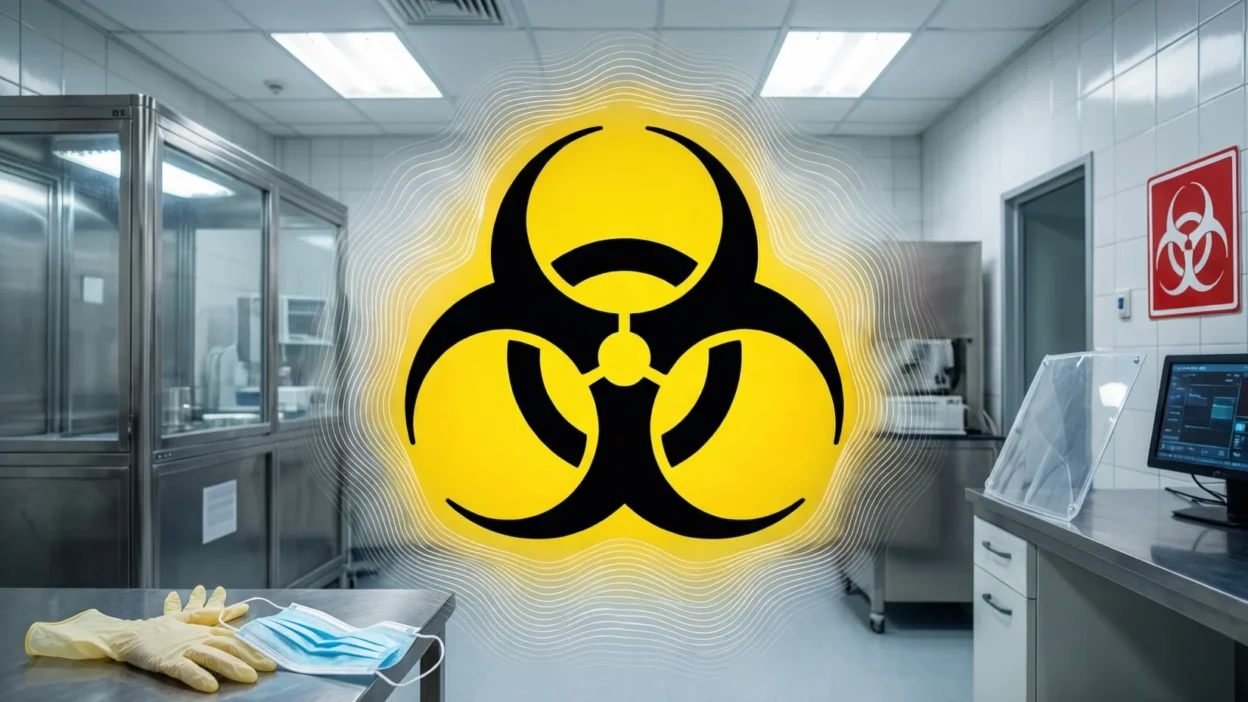
Have you ever seen a strange orange or black sign with three curved shapes and wondered what it means? That sign is called the biohazard symbol, and it tells us to be extra careful.
Just like how a stop sign tells cars to stop, the biohazard symbol tells people to pay attention because something could be dangerous.
In this article, we explain the meaning, history, use, and importance of the biohazard symbol in simple, friendly language.
We include examples, explanations, and helpful tips so that kids, parents, teachers, and general readers can easily understand and remember this important sign.
🧠 What Is the Biohazard Symbol?
The biohazard symbol is a sign used to warn people about biological dangers — things that could make you sick if you touch or breathe them. It is a universal warning sign used in labs, hospitals, and many places where harmful biological materials might be present.
Example:
If you see this symbol on a container in school science class, don’t open it — it might contain something dangerous!
Tip: Always respect safety symbols — they protect you!
🧬 Why Is the Biohazard Symbol Important?
The symbol protects people by warning them about hazardous biological materials. It helps prevent accidents, sickness, and contamination.
Example:
Just like crossing signs keep you safe near roads, the biohazard sign keeps you safe near risky biological stuff.
Insight: This symbol helps doctors, scientists, and workers stay safe every day.
📜 The History of the Biohazard Symbol
The biohazard symbol was created in 1966 by a team of scientists looking for a sign that was:
- Unique
- Easy to recognize
- Meaningful for safety
They wanted something that no one would confuse with other symbols.
Fun Fact: The design intentionally looks strange so people would remember it!
🎨 What Does the Biohazard Symbol Look Like?
The symbol has:
- Three curved shapes
- A circle or central design
- Usually black on orange or yellow background
It’s very recognizable and stands out in safety settings.
🔍 Where Do You See the Biohazard Symbol?
You might see it:
- On medical waste containers
- In hospitals and labs
- On cleaning supplies
- At dangerous spill sites
- On packaging of certain biological samples
Tip: If you see it, don’t touch anything nearby!
🧪 What Counts as a Biohazard?
Biohazards include things like:
- Blood and body fluids
- Viruses and bacteria
- Used needles
- Laboratory samples
- Contaminated bandages
These can make people sick if not handled properly.
🧴 Why Hospitals Use Biohazard Signs
Hospitals use them to:
- Protect patients
- Protect workers
- Prevent infection spread
Example: A red bag with a biohazard symbol holds used bandages and gloves.
🧑🔬 Why Labs Use the Biohazard Symbol
In labs, scientists work with samples that could be dangerous. The symbol:
- Marks restricted areas
- Marks dangerous samples
- Warns visitors
Tip for Learners: Always follow lab safety rules!
🧹 How Biohazard Waste Is Handled
Biohazard waste is:
- Collected safely
- Placed in marked containers
- Sterilized or incinerated
- Disposed of carefully
Example: A hospital worker wears gloves and uses special bins for biohazard waste.
🏫 Teaching Kids About Safety Symbols
Symbols like the biohazard sign help kids learn safety early.
Fun Activity: Match safety symbols with their meanings!
🧠 Biohazard vs. Radiation Symbol
These are different:
| Symbol | Meaning |
|---|---|
| 🧪 Biohazard | Biological danger (germs) |
| ☢️ Radiation | Nuclear/radioactive danger |
Tip: Don’t confuse the two — each has its own meaning.
🔡 What Biohazard Colors Mean
Common colors:
- Orange/Yellow: Warning
- Black: Symbol stands out
- Red: Danger (blood‑related biohazards)
Example: Blood bags often have red biohazard labels.
🧠 What to Do When You See the Symbol
- Stop
- Don’t touch
- Alert an adult or trained person
- Move back if necessary
Tip: Safety first!
🧑🏫 How Teachers Can Explain It
Use simple examples like:
- “It’s like a danger sign that tells you something invisible (germs) could hurt you.”
Activity Idea: Draw your own safety symbols!
📚 Simple Definitions for Students
- Biohazard: Something dangerous to living things
- Contamination: Unwanted harmful substances
- Infection: When germs make you sick
📌 Why It Matters in Daily Life
Even outside labs or hospitals, you might see this symbol on:
- Trash bags in clinics
- Cleaning trucks
- Safety training posters
Awareness helps everyone stay safe.
🦠 Germs Behind Biohazards
Biohazards include:
- Bacteria (tiny organisms)
- Viruses (like the flu)
- Fungi (like mold)
- Parasites
Example: COVID‑19 virus is a type of biohazard.
🌍 Global Use of the Biohazard Symbol
The symbol is used worldwide. That means people everywhere understand the warning.
Tip: Symbols help break language barriers.
🛑 Why Not Use Words Instead?
Words could be confusing in different languages or during emergencies. A symbol is:
- Faster to recognize
- Universal
- Easy to remember
🧯 Safety Gear Around Biohazards
When working with biohazards, people use:
- Gloves
- Masks
- Goggles
- Lab coats
Example: A scientist puts on a mask before handling samples.
🧠 Safety Rules Everyone Should Know
- Never touch unknown materials
- Wash hands often
- Listen to safety instructions
- Respect warning signs
🧩 Fun Facts About the Symbol
- It was designed to be memorable
- Not based on any letters or pictures
- Meant only for safety use
🚑 Why Biohazard Training Matters
Workers get special training so they:
- Know what to do
- Avoid accidents
- Protect others
🗂️ Biohazard Labels and Packaging
Shipping dangerous biological samples requires:
- Proper labeling
- Correct containers
- Training documents
🧠 How Kids Can Remember It
Think of the symbol like a germ danger sign — just like a big “Beware of Dog” sign!
🧬 What Happens If It’s Ignored?
Ignoring the symbol can lead to:
- Sickness
- Spread of disease
- Accidental exposure
Example: Touching a surface without knowing it’s contaminated.
🧠 Biohazard Levels (Biosafety Levels)
There are four safety levels in labs:
- BSL‑1: Low risk
- BSL‑2: Moderate risk
- BSL‑3: Serious risk
- BSL‑4: Highest risk
Each has strict rules.
🧍♂️ How Parents Can Teach Safety
Parents can:
- Explain what symbols mean
- Show real examples
- Practice safety at home
Tip: Ask questions like “What would you do if…?”
🧠 Everyday Examples of Biohazard Awareness
- Disposable tissues
- Used bandages
- Medical test materials
Knowing the symbol helps you stay alert.
✍️ Sample Sentence Using the Term
“The janitor wore gloves and placed the used syringe in a biohazard bin so no one would get hurt.”
🧠 Short Quiz for Kids
- What does the biohazard symbol warn us about?
- Where might you see it?
- What should you do if you see it?
🎯 Key Takeaways (Quick Summary)
- The biohazard symbol warns of biological danger
- It is used worldwide
- It helps protect people from harmful germs
- It appears in hospitals, labs, and on waste containers
- Recognizing it can save lives
Conclusion
Understanding the biohazard symbol meaning helps keep you and others safe. It’s more than just a sign it’s a universal warning that says, “Be careful here!”
If you’re a student learning in class, a teacher explaining safety, or a parent helping your child understand the world, knowing this symbol and its importance makes a real difference.
FAQs:
Q1: What is a biohazard symbol?
A biohazard symbol is a warning sign indicating the presence of dangerous biological materials like viruses, bacteria, or contaminated waste.
Q2: Where is the biohazard symbol used?
It is commonly used in hospitals, labs, medical waste containers, and areas where biological hazards exist.
Q3: Why is the biohazard symbol important?
The symbol helps prevent accidents, sickness, and contamination by alerting people to potential biological dangers.
Q4: What do the colors of the biohazard symbol mean?
Orange or yellow usually indicates a warning, black makes it stand out, and red signals blood or infectious hazards.
Q5: How should I react if I see a biohazard symbol?
Stop, don’t touch anything nearby, alert a trained adult, and maintain a safe distance.
Q6: Are biohazard symbols used worldwide?
Yes, the biohazard symbol is recognized internationally as a warning for biological hazards.
Q7: Can kids understand the biohazard symbol?
Yes! With simple explanations and examples, kids can learn it means “germs or dangerous materials are here — be careful.”
Q8: What materials are considered biohazards?
Blood, body fluids, used needles, laboratory samples, and contaminated bandages are common biohazards.