
Have you ever wondered why some symbols look cool but seem mysterious? Just like why a rose can mean love or why a thumbs‑up shows approval, symbols carry meanings without words.
The anarchy symbol is one such powerful sign with a long history and many interpretations.
Understanding it helps students, teachers, and curious minds see how symbols communicate ideas in culture, politics, and art.
What Is the Anarchy Symbol?
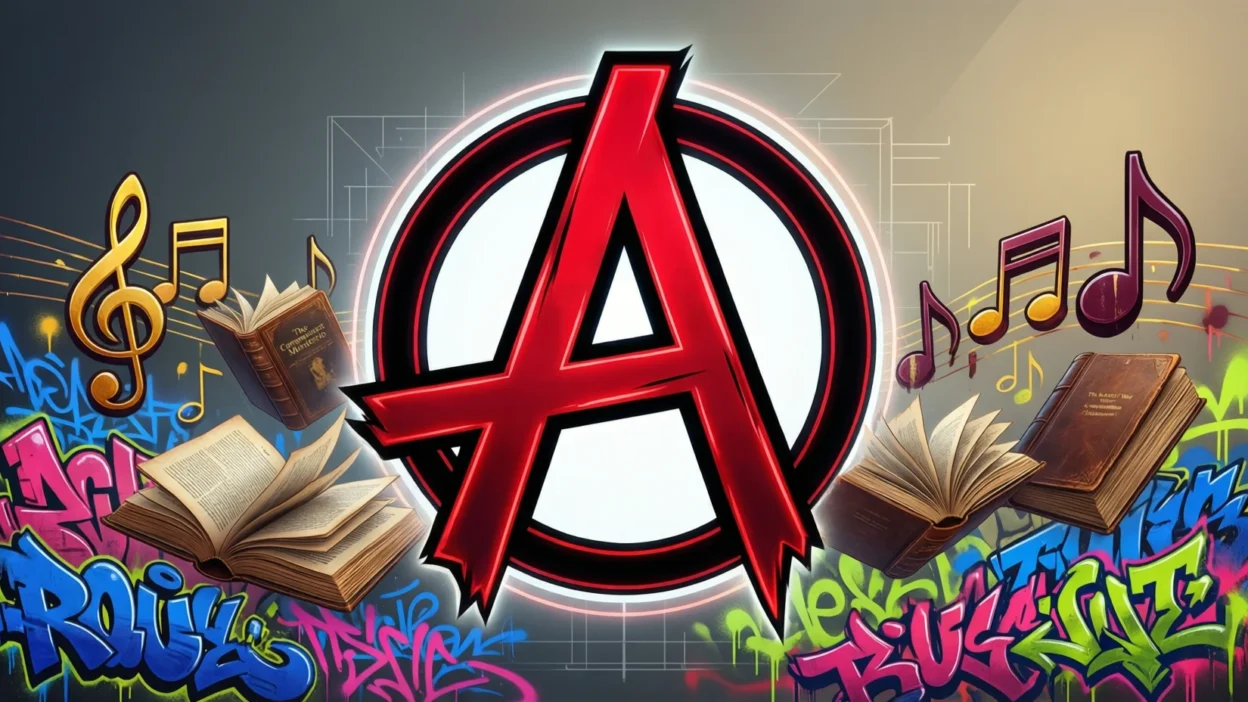
The anarchy symbol most commonly looks like a capital letter “A” inside a circle. People around the world use it to represent certain beliefs and values. Even though it may look simple, it carries deep history and significance.
Example:
When you see this symbol on a poster or graffiti, someone is trying to communicate an idea without using many words.
Tip:
Always think about why a symbol is used and what message it might represent.
Basic Meaning of Anarchy
At its core, “anarchy” means no rulers or no government. The word comes from Greek: an (no) + arkhos (leader or ruler).
Sample Sentence:
In a school debate, Sara explained that anarchy means people want freedom without a government controlling everything.
Insight:
Anarchy isn’t always chaos many people who use the symbol mean self‑governance or freedom.
History of the Anarchy Symbol
The anarchy symbol grew popular in the 20th century, especially during political movements when people challenged authority.
List of Historical Phases:
- Early political activism in Europe
- 1960s counterculture movements
- Punk rock subculture in the 1970s and 1980s
Example:
Punk bands often wore the symbol on jackets to show rebellion against strict rules.
The “A” and the Circle Explained
The letter A stands for Anarchy, and the circle around it means order which may seem surprising!
Comparison:
Like a clock face surrounds time, the circle shows that even ideas of freedom can have structure.
Tip:
Think of symbols as visual metaphors images that stand for ideas.
What Does Anarchy Mean in Politics?
In political discussions, anarchy often refers to systems without centralized government but with strong community cooperation.
Example:
Imagine a school where students and teachers make all decisions together fairly that’s a form of organized self‑rule.
Anarchy vs Chaos: What’s the Difference?
Many people think anarchy automatically means chaos, but that’s a common misunderstanding.
Comparison:
- Anarchy: freedom from rulers, self‑organized order
- Chaos: no rules, no agreement, random disorder
Tip for Kids:
Not all freedom means disorder think of a group working without a boss but with shared rules.
How People Use the Anarchy Symbol Today
You might see the anarchy symbol in art, music, protests, and fashion.
Examples:
- T‑shirts
- Pint glass designs
- Posters in public demonstrations
Insight:
Symbols often carry different meanings depending on who uses them.
Anarchy Symbol in Pop Culture
The symbol appears in movies, video games, and graphic novels.
Sample Sentence:
In the comic book, the rebel character wore an anarchy symbol to show she stood against unfair rulers.
Is the Anarchy Symbol Illegal?
In most places, using the symbol is not illegal but context matters.
Important Note:
If a symbol is used to threaten or harm others, that action not the symbol itself can be illegal.
Symbolic Communication: Why Symbols Matter
Humans use symbols to share ideas quickly and powerfully.
Examples:
- Heart symbol = love
- Peace sign = peace
- Anarchy symbol = anti‑authority
Tip:
Symbols are like shortcuts in language and meaning.
Anarchy in Simple Words for Kids
Anarchy means people want to make decisions together instead of listening to one boss or ruler.
Example:
If a group of classmates decides everything together instead of listening to a teacher, that’s a kind of little anarchy but safe and organized.
Why Some People Support Anarchy
People who like anarchy often believe in personal freedom and fairness.
List of Beliefs:
- No oppressive authority
- Communities help each other
- Individual rights are important
Insight:
Many supporters imagine a world where people cooperate without bosses controlling everything.
Why Some People Disagree with Anarchy
Others think society needs rules to keep people safe.
Points of Disagreement:
- Critics worry about safety
- They believe a stable government protects rights
The Anarchy Symbol and Art
Artists use the symbol to show rebellion or challenging old ideas.
Example:
An artist might paint the symbol to express frustration with unfair rules.
Anarchy Symbol and Music Subcultures
Punk rock and alternative music often used the anarchy symbol to express youth rebellion.
Tip:
Music often reflects how young people feel about society and rules.
How to Explain Anarchy to Your Friend
Try using simple comparisons like teamwork instead of one leader, and shared choices instead of orders.
Sample Sentence:
“Anarchy is like a group working together without anyone telling everyone else what to do.”
Anarchy and Community Living
Some communities experiment with self‑governed living where residents share rules.
Examples:
- Cooperative housing
- Shared gardens where everyone decides
Anarchy in Literature
Books sometimes portray anarchist characters to explore themes of freedom and society.
Example:
In a story, a character might challenge strict school rules to show creative thinking.
Anarchy and Rules: Can They Coexist?
Yes! Some theories of anarchy emphasize shared rules, not total disorder.
Insight:
Rules can be created by everyone equally like a classroom council.
Symbols that Look Similar to Anarchy
There are other circle‑based symbols, but they mean different things.
Examples:
- Peace sign
- Copyright symbol ©
- Circle with a line through it = “no”
Tip:
Always learn what each symbol means before assuming.
How to Respect Different Views on Anarchy
Understand that people have different perspectives.
Tip:
Ask questions like:
- “Why do you use that symbol?”
- “What does it mean to you?”
Common Misconceptions About the Anarchy Symbol
Many think it always represents violence but that’s not necessarily true.
List of Misconceptions:
- Anarchy equals chaos
- Anarchy always means rebellion
- The symbol is dangerous
Truth:
It often represents ideas about freedom and choice.
Teaching Children About Symbols
Talk about symbols like stories with meaning, context, and history.
Tip for Parents/Teachers:
Use real‑life examples (like emojis) to show how symbols communicate.
The “Circle A” and Its Variations
You might see different stylized versions, but the core idea stays the same.
Examples:
- Painted graffiti
- Digital icons
- Fashion logos
How Students Can Research Symbols
Encourage students to:
- Look up history
- Ask what the symbol means to different people
- Compare interpretations
Anarchy Symbol in World Cultures
People around the world may interpret the symbol differently depending on social context.
Example:
In some countries, it may represent political movements, while in others it’s just art.
What the Anarchy Symbol Doesn’t Mean
It doesn’t always mean crime, violence, or lawlessness.
Tip:
Focus on intent what message the user wants to share.
How to Talk About Political Symbols Respectfully
Discuss ideas, not insults. Be open to different viewpoints.
Tip:
Say, “I see this symbol means X to you here’s what I think.”
Anarchy and Freedom: What’s the Link?
Many people associate the symbol with freedom freedom from control.
Comparison:
Like in art and music, freedom in ideas spreads through symbols.
Fun Activity: Draw Your Own Meaningful Symbol
Ask students to think of an idea and create a symbol for it.
Steps:
- Choose an idea (peace, kindness, courage)
- Draw a simple shape
- Explain your symbol to friends
Symbols in Daily Life
Symbols help us understand things quickly from traffic signs to emojis.
Examples:
- 🔥 means fire or heat
- ❤️ means love
- ☮️ means peace
Key Takeaways About the Anarchy Symbol
- It’s a visual sign with historical roots
- It represents ideas about freedom, not always chaos
- Context matters when interpreting symbols
Conclusion
The anarchy symbol might look like a simple A in a circle, but its meaning is deep and varied. For some, it stands for freedom and self‑direction. For others, it’s a historical or cultural sign.
Understanding symbols like this helps students, teachers, parents, and readers think critically about how images communicate powerful ideas. Symbols everywhere from the peace sign to emojis shape how we see and share meaning.
FAQs
- What does the anarchy symbol represent?
The anarchy symbol represents freedom from rulers, self-governance, and challenging authority, often symbolized by an “A” inside a circle. - Where did the anarchy symbol originate?
It originated in the 20th century, popularized by political movements in Europe and later by punk rock subculture. - Is the anarchy symbol illegal?
Using the symbol is generally legal. Its legality depends on context, such as if it’s used to threaten or incite violence. - What does the circle around the “A” mean?
The circle represents order, showing that anarchy doesn’t always mean chaos but can coexist with structure. - Why do punk bands use the anarchy symbol?
Punk bands use it to express rebellion, anti-authority sentiment, and freedom of expression. - Does anarchy always mean chaos?
No, anarchy can mean organized self-governance and freedom without centralized control, not necessarily disorder. - How can I explain the anarchy symbol to kids?
You can describe it as a symbol of people making decisions together fairly, without one boss controlling everyone. - Are there variations of the anarchy symbol?
Yes, the “A in a circle” can appear in graffiti, fashion, digital icons, and art, but the core meaning remains the same.

Nisham is a content writer currently creating educational and informative articles for symbolisx.com.
He focuses on symbolism, meanings, and easy-to-understand explanations for a wide range of readers.
His writing style is clear, simple, and based on careful research.
Nisham aims to help readers learn complex topics in a straightforward and engaging way.